Hydra, Greece: The Impermanence of Beautiful Things
How lucky I am to be alive — to experience all five of my senses, to know where I am and who I am, to feel and to be felt, to use my brain in both simple and creative ways, to use my legs to move from place to place, to love and to be loved.
Being cradled by a cave-like formation on the coast of the Aegean Sea, I experienced an entirely unfamiliar sense of awareness: all in the course of one breath, I felt the full force of my mortality, slamming into me in the most devastatingly beautiful way. I opened my eyes to the vast sea of blue in front of me, stretching out farther than my eyes could see or my brain could comprehend. I watched intently as the water slammed into itself. Each crashing wave managed to take my breath away and simultaneously breathe an incomprehensible volume of life into my fragile body. Never have I felt more beautifully human than I did in that cove, fully aware of the oxygen entering my body, my long hair brushing against my bare neck, and the loose fabric covering my body — my only armor against the intrepid world around me.
Mortality has always been a sensitive subject for me. I often find myself in the middle of a crippling existential crisis: sweating, panicking between shallow breaths, trying desperately to wrap my head around the concept of my life ending. As someone who has never connected to religion, I have always looked at my inevitable death as a permanent annihilation of everything I am and ever have been — a complete and total erasure of my personhood. Merely thinking about the concept of time and growing older could send me into a vicious mental spiral, so I opted to take the “ignorance is bliss” route and simply not think about it. I would pretend to be ignorant of my inevitable end. But then I found a cove on the Greek island of Hydra, the cove where I would finally find comfort and solace in my mortality.
I remember thinking during the hour-long walk to Vlychos Beach that my destination could not possibly be more beautiful than the journey. Stunning scenes awaited me at every turn: ancient ruins; elevated views of the select civilized portion of Hydra, littered with white stone houses, red clay roofs, and monstrous plants; lush fields populated by the donkeys that serve as the island’s only mode of transportation aside from foot. I must have extended the walk there by at least thirty minutes with how often I stopped to take in the beauty that surrounded me (and take photos for memory of course). Photos tend to make places look more glamorous than they actually are to the naked eye, but a camera could never capture what I saw on the way to the beach that day, the utter perfection of it so unfathomable that my entire being became overwhelmed with unintelligible emotion. I simply could not believe I was actually there, breathing the air of a place so perfect, a place I thought could only exist on the cover of a Landscapes of Greece calendar. With every new view I beheld, I would immediately begin plotting how I could reimagine the beauty of the landscape onto a canvas. I would see hopeful visions of myself mixing together beautiful greens, blues, and earthtones and applying them to the canvas in a way that attempts to truly express the feeling of being in the place, satisfying my burning desire to share the feeling beyond the confines of my own brain.
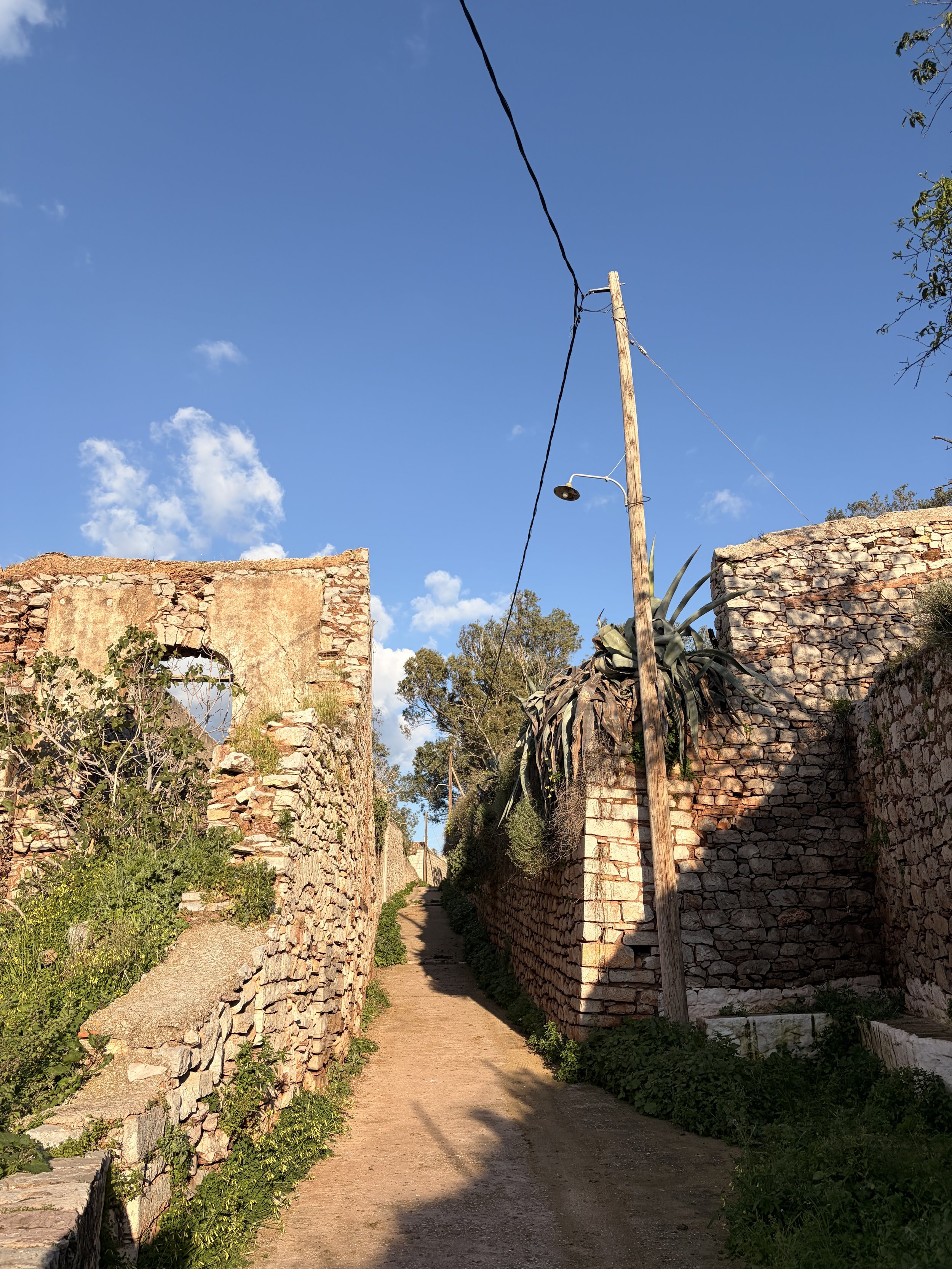
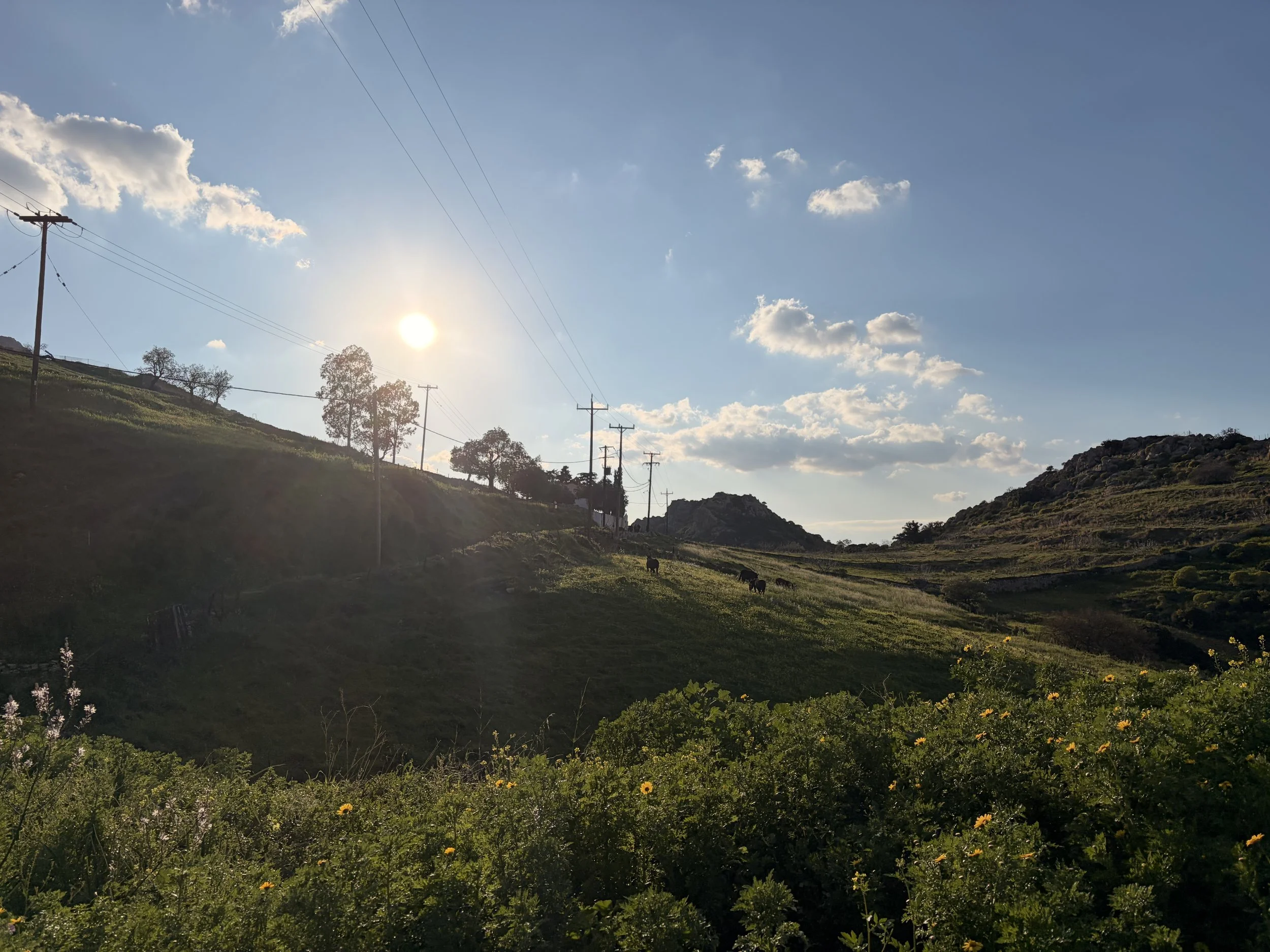
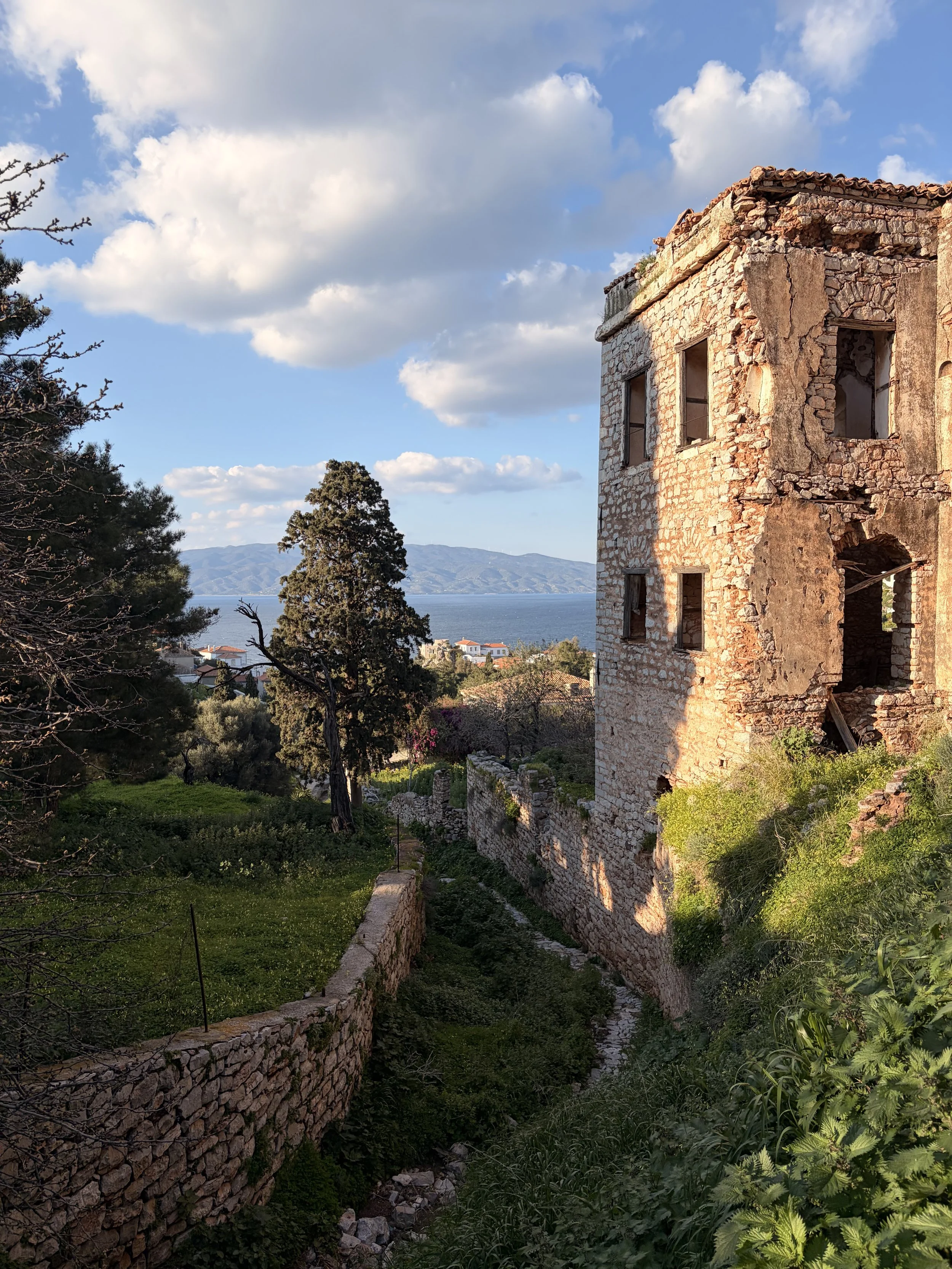
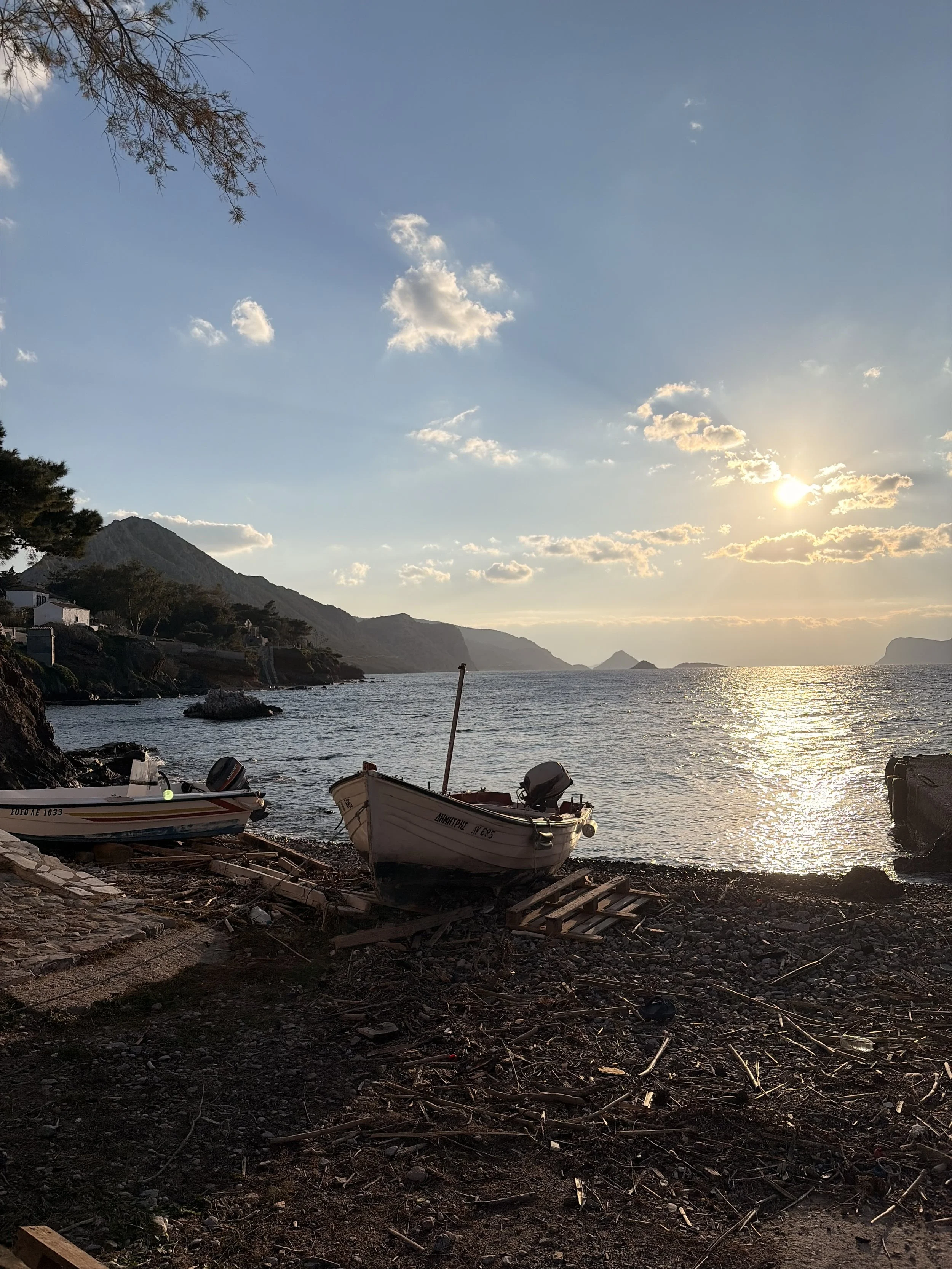
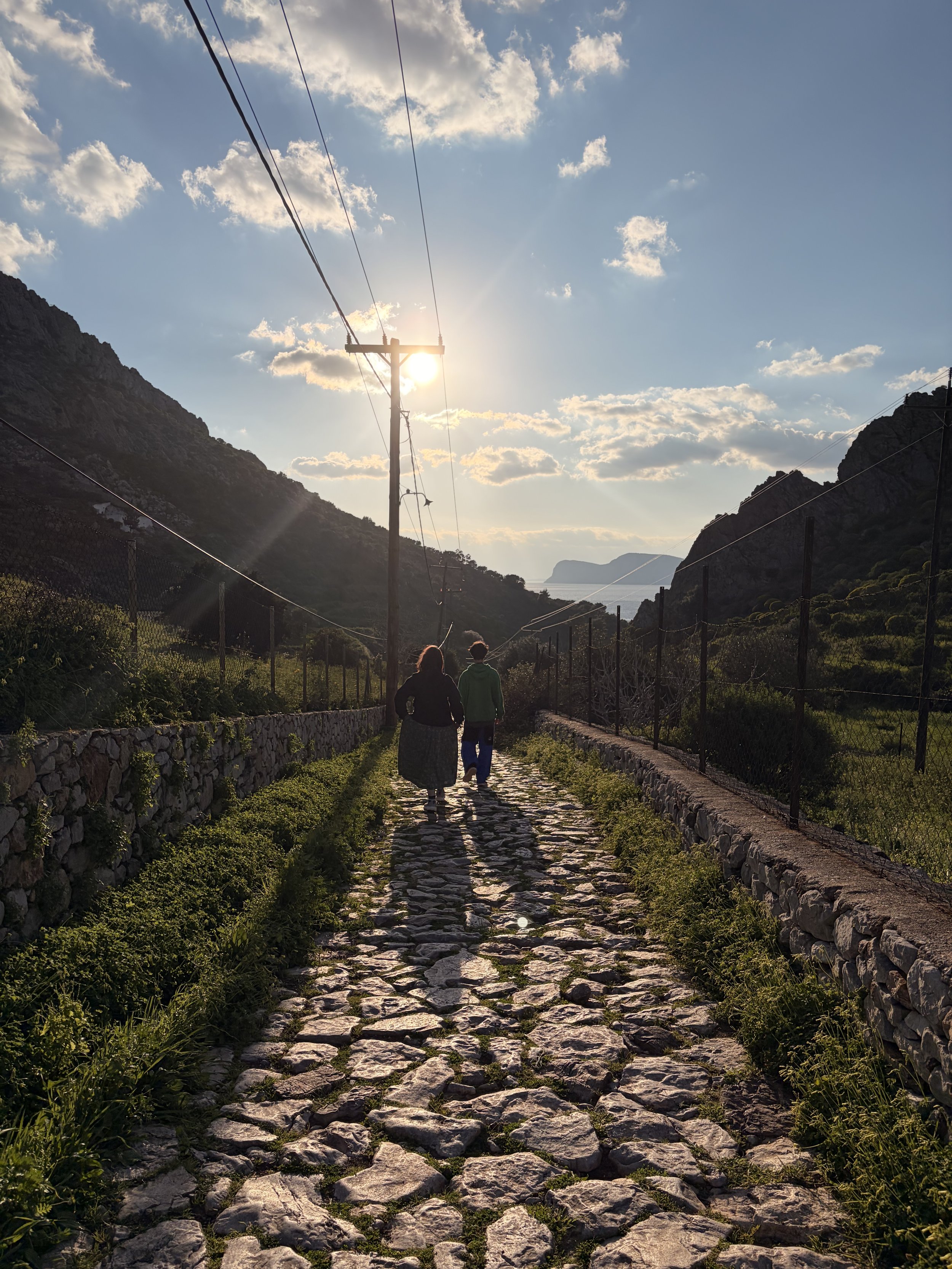
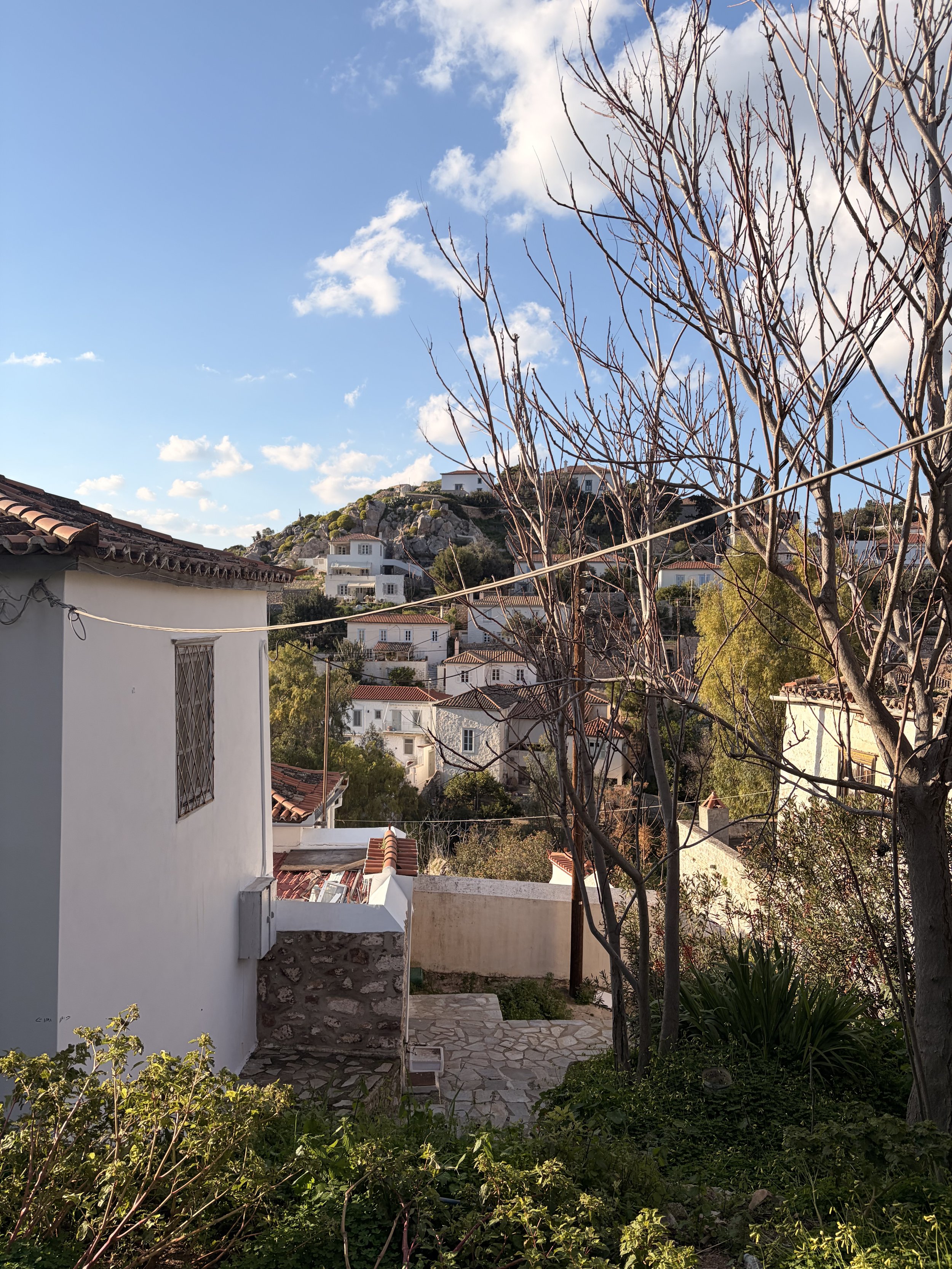
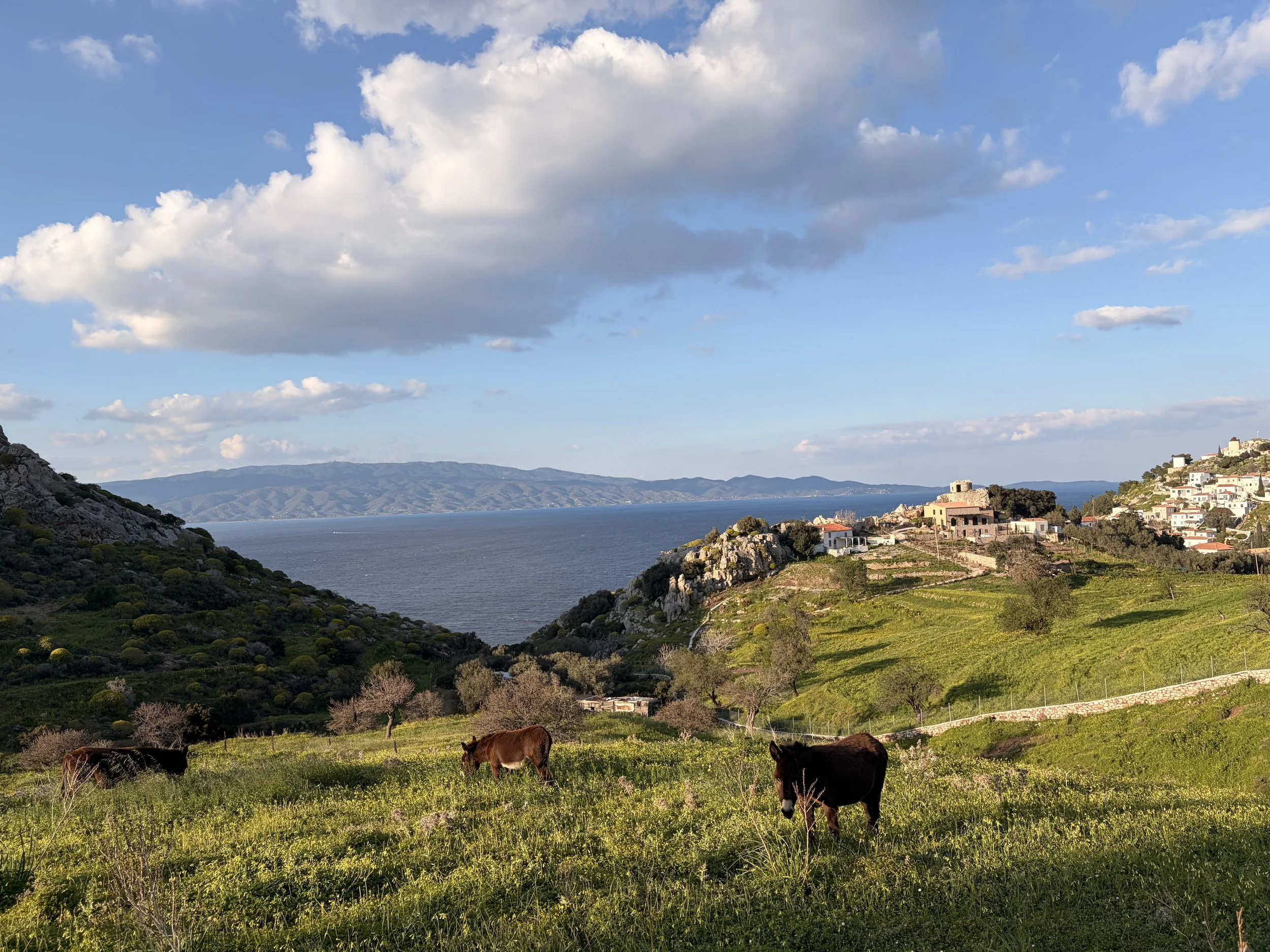
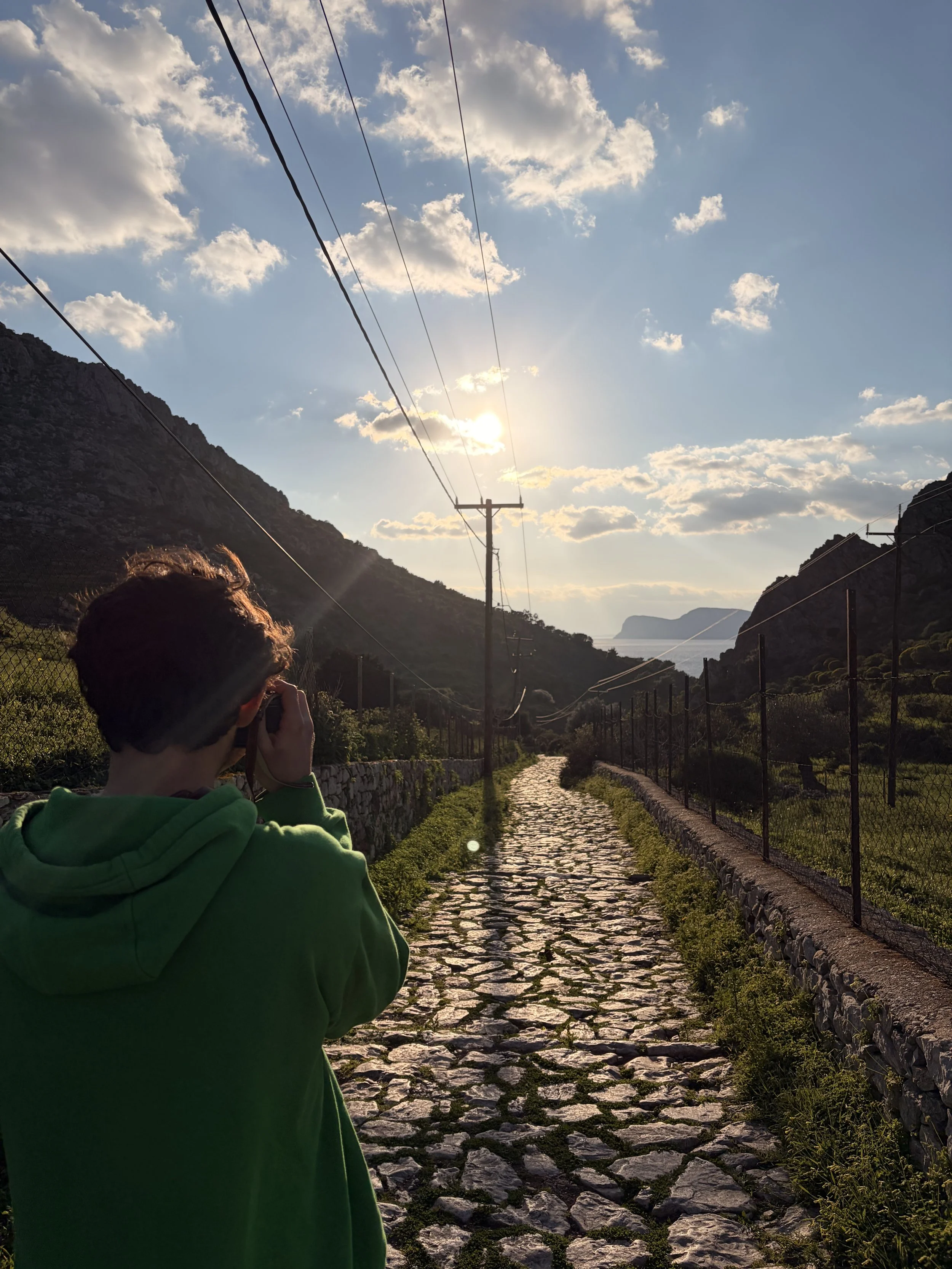
Upon arriving at Vlychos Beach, I remember losing some of that intense emotion and mellowing out to a more neutral state of being. As I strolled down the path to the coast, finally coming down from the elevated land that I climbed endless flights of steep stone stairs to get to, the familiar smell of salt hit my nose and filled me with the warm sensation of childhood nostalgia. In an instant, vibrant childhood memories of family beach trips flooded my brain. A sort of calmness rushed over me, and my mind, overwhelmed from the walk, settled at the warmth of the sun, the smell of the salt, and the gentle sound of the lapping ocean waves. Clueless to what would come, I continued walking down the path until I reached a rocky cove, reflecting the glow of the near-setting sun and inviting me to come closer. I climbed clumsily over loose rocks, going deeper into the cove and inching closer to the calming presence of the ocean. The closer I got to the water, the more captivating the scene before me was. Eventually, I surrendered to the overwhelming sensation quickly overtaking my body and found a natural seat in the cove where I would comfortably rest for the next hour, wholly absorbing every possible ounce of the present I was existing in.
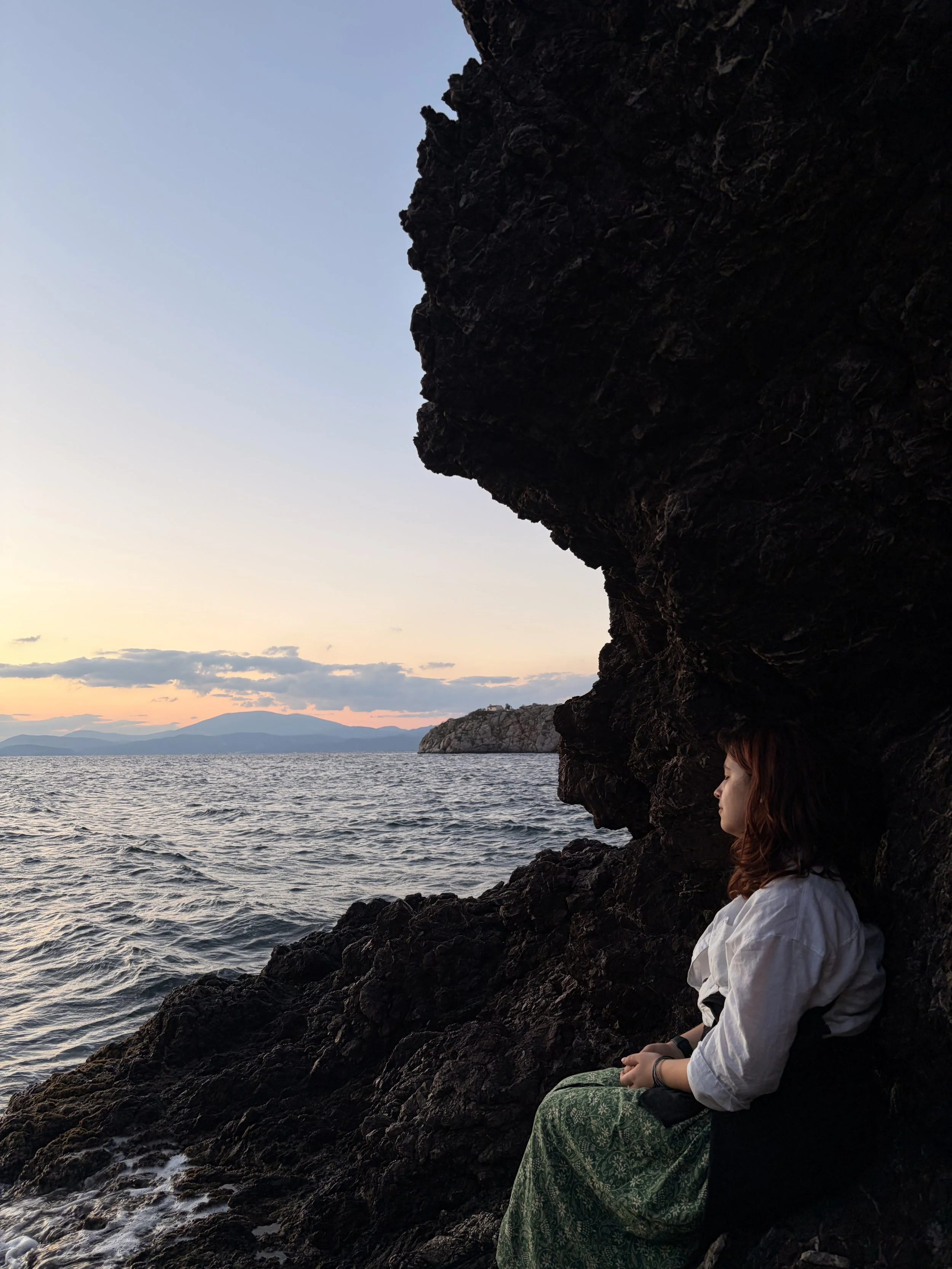
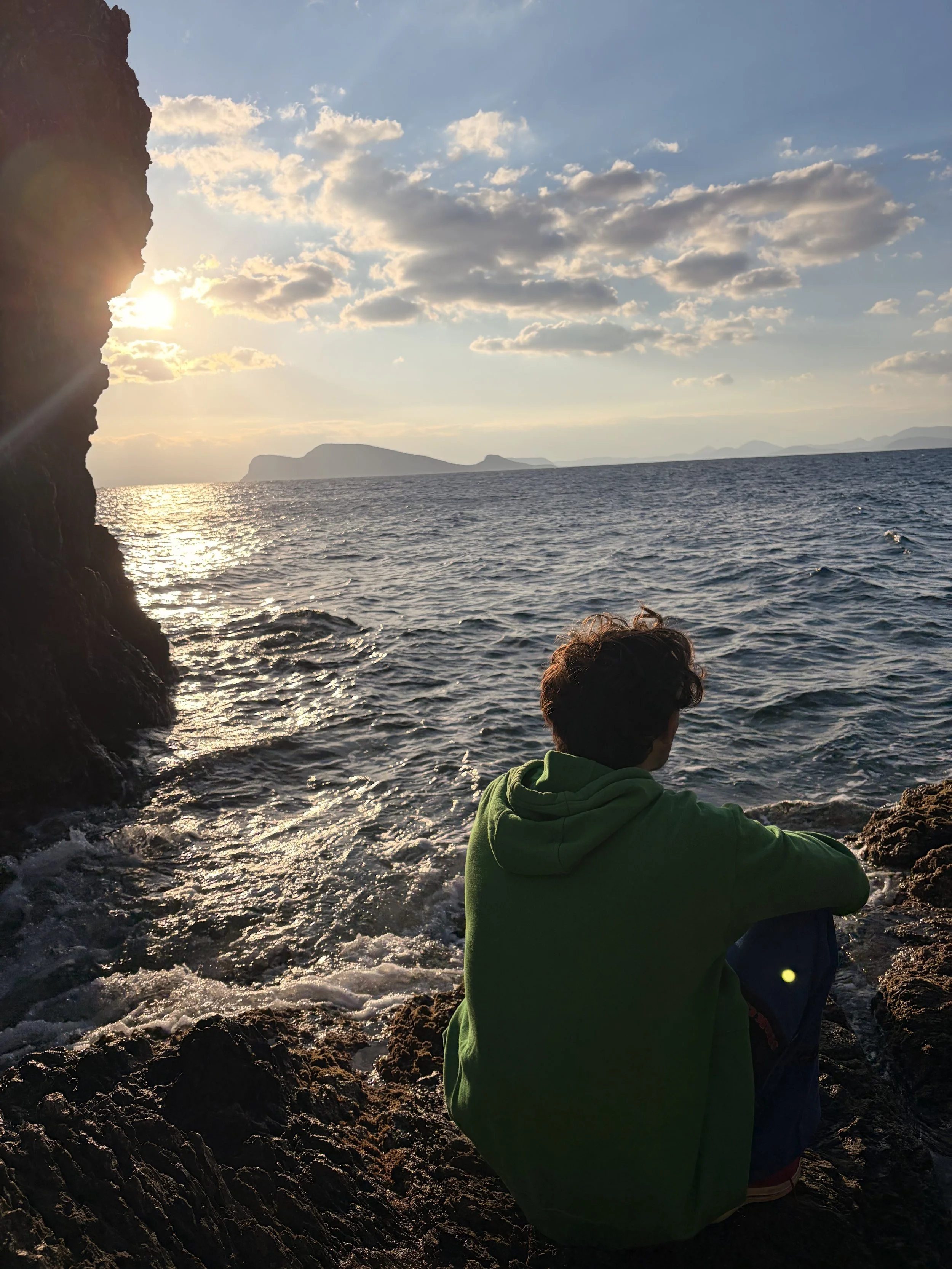
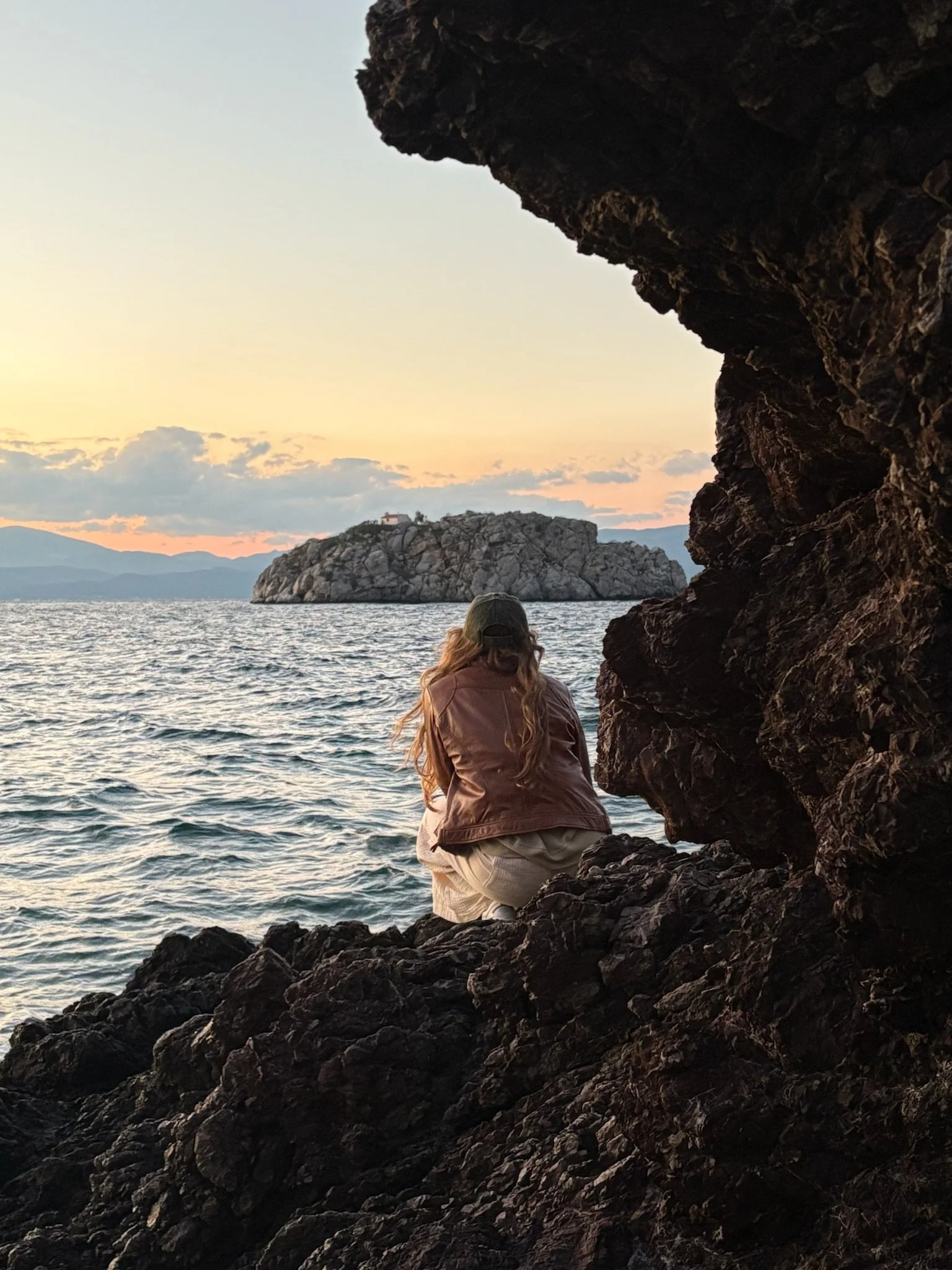
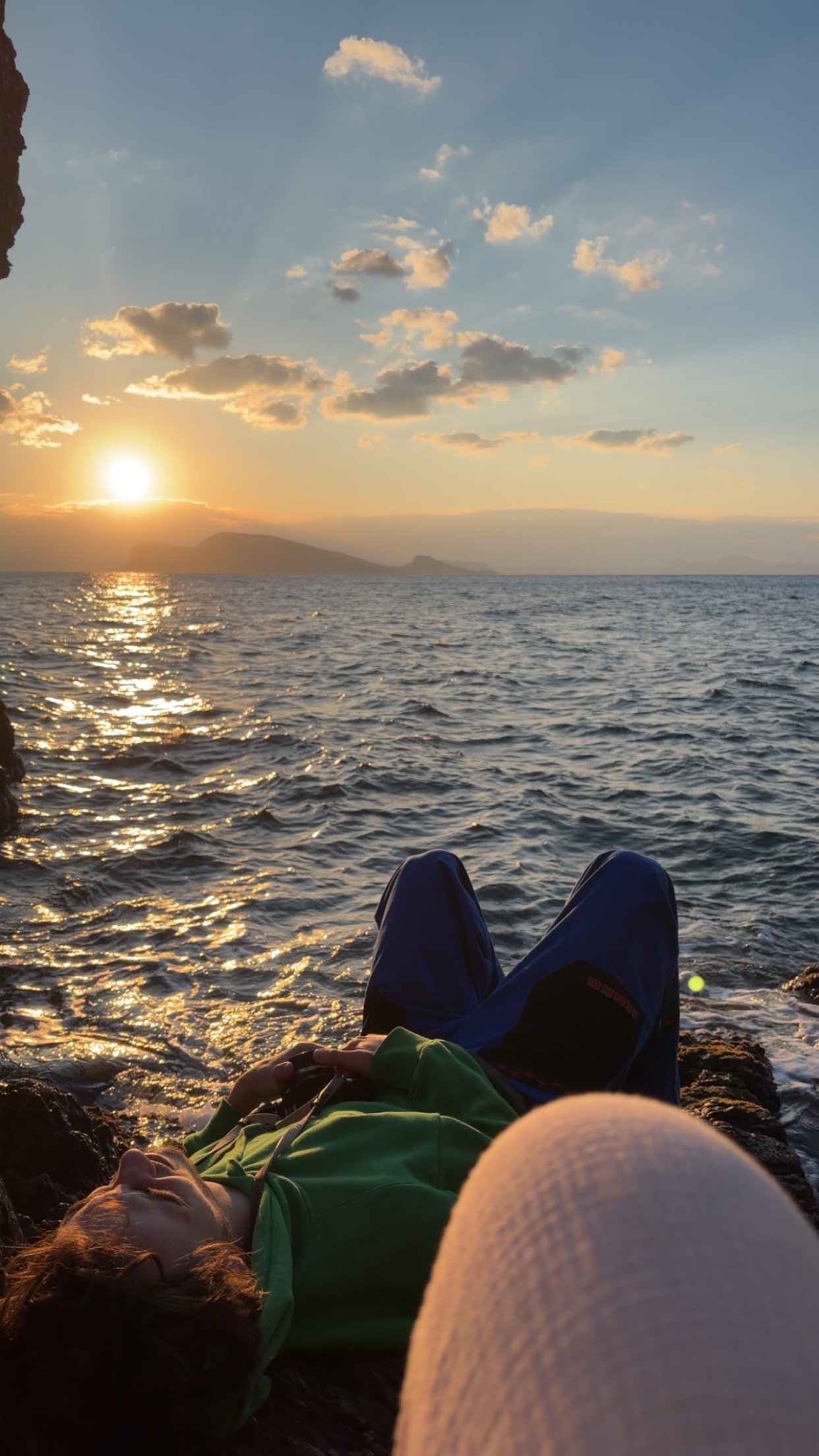
Never have I ever felt more present than I did sitting in that cove, staring out at the expanse of ocean before me. Painfully aware of where I was and who I was, I somehow seemed to remember everything that had ever happened to me in this lifetime. I remembered every friendship, every smile from a stranger, every death of someone I loved, every success, and every failure. For the first time, I felt that I fully understood life, an otherworldly clarity I feared I would never reach. Inside of that cove, with the orange sun glaring directly into my glistening, tear-filled eyes, I reflected on everything I had ever done and everything I would ever do in the future, quietly reveling in my newfound respect for the collective importance of beginnings, middles, and endings. The beauty of my short life was tangible at that moment. Watching flocks of seagulls glide through the air, completely unafraid of the depth of seawater below them, I felt as though I was holding my mortality in my small hands, finally appreciating it in all of its devastating glory. Occasionally, I would catch myself dreading the inevitable end of the moment I was existing in, knowing with my full self that I might never experience something like it again, though ultimately, I was able to recognize that, just like my short life, this moment was not meant to last forever. In fact, impermanence is precisely the thing which makes a moment what it is. If it lasted forever, it would not be a moment — it would just be.
When asked about my experience in Hydra, I immediately jump to the hour I spent in this cove, but despite my best efforts, I am never able to explain why it affected me the way it did. It truly felt so otherworldly and, at the same time, intensely human that simple words could not begin to communicate its weight. Sometimes I wish I could transfer a feeling if only to have another person to fully share the experience with. Describing the atmosphere is easy (the cloudless sky, the slight mist against my legs from the waves lapping against the rocks, the protective warmth of the sun on my face), but I think the spirituality of this experience was truly tailored for me, allowing me to finally see the beauty in something I once feared with my entire self.
Beautiful things are not permanent, and that is okay — a lesson I never could have imagined I would learn from a rock in the ocean.
Much love,